This page provides regional information related to visas and naturalization in Hiroshima. Click the article title below to view the full article.
How Foreign Residents Can Open a Bank Account in Hiroshima, Japan(1 Mar,2026)
Overview of Political Parties’ Policies on Foreign Residents in Japan(29 Jan,2026)
Hotel Construction Boom in Hiroshima and Required Visa Statuses for Working in Hotels(18 Dec,2025)
Mika Yokota Becomes First Female Governor of Hiroshima Prefecture(9 Nov, 2025)
Japan’s foreign resident policy is now at a turning point( 21 Oct,2025)
Japan’s First Female leader of LDP and Her Immigration Policy( 4 Oct, 2025)
How to Study in Japan: Student Visa Basics and Schools in Hiroshima (20 Sep, 2025)
Hiroshima: A City for Living, and the Story of a Naturalized Basketball Star( 6 Sep,2025)
How Foreign Residents Can Open a Bank Account in Hiroshima, Japan
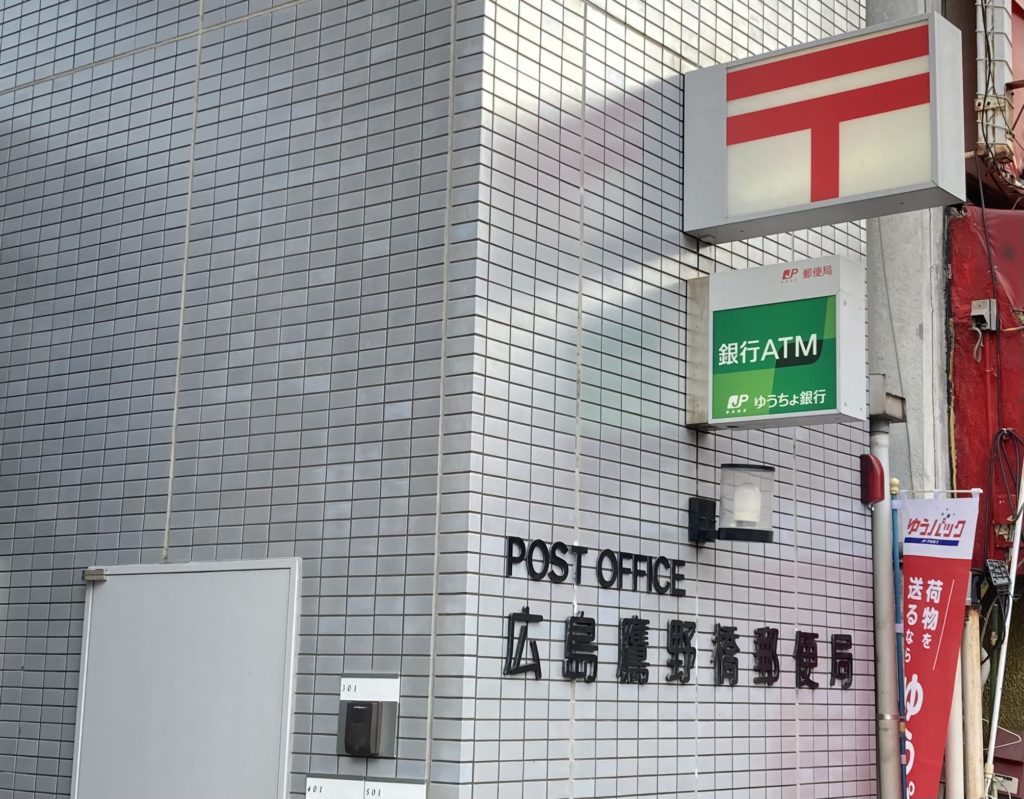
One of the essential things for living in Japan is a bank account. A Japanese bank account is necessary for receiving salary payments, paying rent, and setting up automatic payments for utilities. It is also required to receive international remittances from overseas. However, opening a bank account in Japan as a foreign resident is not always easy. Due to concerns such as money laundering and illegal account transfers, financial institutions in Japan take a cautious approach when reviewing applications from foreign nationals.
Requirements for Opening a Bank Account
The specific requirements vary depending on the bank, but generally, the following conditions apply:
1. A Residence Status with More Than Six Months of Validity
You must hold a residence status with a period of stay of at least six months. This does not necessarily have to be a work visa; other statuses such as “Student” are also acceptable.
2. Resident Registration and a Residence Certificate
You must complete resident registration at the local municipal office where you live. Once registered, you will be able to obtain a Certificate of Residence (Juminhyo).
Foreign nationals with a residence status valid for more than three months are legally required to report their address to the Immigration Services Agency through their local municipality.
3. A Reachable Phone Number
You must have a valid phone number in Japan. A mobile phone number is acceptable, but it must be a Japanese number.
Banking Options in Hiroshima
In Hiroshima, there are two major regional banks: Hiroshima Bank and Momiji Bank. These banks have branches throughout the prefecture and are convenient for daily life in Hiroshima.
- Hiroshima Bank generally requires a residence card showing at least three months of remaining validity and a personal seal (inkan).
- Momiji Bank typically requires at least six months of remaining validity on your residence card and a personal seal.
- If you apply in person, you may be required to bring a Japanese speaker with you, as some branches do not provide service in foreign languages.
There are also branches of major national banks in Hiroshima, including Sumitomo Mitsui Banking Corporation, MUFG Bank, and Mizuho Bank. However, each of these banks has only one branch in Hiroshima City, which may be less convenient depending on your location.
Recommended Banks for Foreign Residents
Japan Post Bank
Japan Post Bank is one of the most accessible options for foreign residents.
- You can open an account with as little as three months of remaining residence validity.
- A personal seal is not required; a signature is sufficient.
- You can apply using a multilingual mobile app.
- The account opening process usually takes about two weeks.
- Japan Post Bank branches and ATMs are widely available, even in rural areas, making it very convenient.
Online Banks
Online banks such as Rakuten Bank and SBI Shinsei Bank are also popular among foreign residents.
- Applications can be completed online.
- No in-person visit is required in most cases.
- These banks are especially convenient for people who have recently arrived in Japan.
Important Notes
・If you change your residence status, you must notify your bank.
・If your period of stay falls below three months, your account may be frozen.
・Always notify your bank when you renew your residence status.
・When leaving Japan permanently, be sure to close your bank account.
Selling or transferring your bank account to another person is illegal and may result in criminal penalties and future denial of entry to Japan.
Conclusion
A bank account is essential infrastructure for living smoothly in Japan. However, opening an account can be challenging for foreign residents due to Japanese-language paperwork and requirements such as personal seals, which may be unfamiliar.
If you have difficulty opening a bank account, it is advisable to seek assistance from your employer, school support office, or a Japanese professional who can guide you through the process.
(posted 1 Mar,2026)
Overview of Political Parties’ Policies on Foreign Residents in Japan
Ahead of the House of Representatives Election
Japan will hold a House of Representatives election on February 8. This election determines the composition of the National Diet, and the policies advocated by political parties are likely to be directly reflected in national governance. The leader of the party that wins the largest number of seats typically becomes the Prime Minister.
In this election, policies concerning foreign residents have emerged as one of the key issues. Below is a summary of the main positions taken by major political parties regarding foreign nationals.
Summary of Each Party’s Position on Foreign Resident Policies
Liberal Democratic Party (LDP)
The LDP proposes revising laws to ensure that the government can accurately identify foreign ownership of residential properties and land, including information about property owners.They have expressed their intention to swiftly implement the recently formulated basic policy in order to build an orderly and inclusive society.
Centrist Reform Party
The Centrist Reform Party is a newly formed political group created through cooperation between the Constitutional Democratic Party of Japan and Komeito for the purpose of this election.This party emphasizes the creation of a society in which both Japanese nationals and foreign residents respect each other and live safely and securely while following established rules.
Japan Innovation Party (Nippon Ishin no Kai)
The party advocates establishing a dedicated Agency for Foreign Residents to centralize policy coordination. It also proposes setting an upper limit on the number of foreign nationals accepted into Japan and strengthening regulations on land acquisition by foreigners.
Democratic Party for the People
The party supports enacting a Foreign Land Ownership Regulation Act, which would apply not only to areas surrounding defense facilities but also to other regions.
Japanese Communist Party
The party calls for abolishing provisions in the Immigration Control Act that allow for deportation during the refugee application process and the offense of refusing deportation. It also supports allowing foreign workers to bring their family members to Japan.
Sanseito and Related Groups
These parties argue that labor shortages should not be addressed by relying on foreign workers. They propose establishing a new Comprehensive Foreign Policy Agency, tightening controls on both the total number of foreign residents accepted and the management of the system, and strengthening enforcement against illegal overstays.
Reiwa Shinsengumi
The party seeks to abolish the Technical Intern Training Program and the proposed “Developmental Employment” system, and to enact comprehensive legislation guaranteeing the rights of foreign nationals.
Overall Trends
The current ruling coalition plans to implement policies based on its recently announced basic policy framework. Compared with previous administrations, its stance toward accepting foreign nationals appears more restrictive.
At the same time, Sanseito, which has rapidly gained attention over the past year, is promoting the most stringent and controversial proposals regarding foreign residents.
In contrast, the Centrist Reform Party, the Japanese Communist Party, and Reiwa Shinsengumi emphasize policies aimed at coexistence, mutual recognition, and integration between Japanese nationals and foreign residents.
According to opinion polls compiled by major media outlets on the 29th, support for the Liberal Democratic Party and Sanseito is increasing, while centrist parties are reportedly struggling to expand their voter base.
The House of Representatives election will take place on February 8.
(posted 29 Jan,2026)
Hotel Construction Boom in Hiroshima and Required Visa Statuses for Working in Hotels

In Hiroshima City, a hotel construction boom is underway in response to the growing demand from inbound tourism. In the central Kamiya-cho and Hatchobori districts, a new luxury hotel under Hyatt’s Andaz brand, Andaz Hiroshima, is scheduled to open in 2027 as part of a large-scale redevelopment project. In addition, new hotel projects are progressing around Miyajima-guchi, the gateway to the World Heritage Site Itsukushima Shrine, as well as around Hiroshima Station, where business hotels are being built one after another.
Background and Challenges of the Hotel Construction Boom
The main driving force behind this trend is the shared goal of both the public and private sectors to extend visitors’ length of stay in Hiroshima and increase tourism spending. Historically, Hiroshima has been known as a city often visited on day trips. By expanding accommodation capacity, stakeholders hope to encourage overnight stays and higher per-capita consumption.
Another contributing factor is the near completion of large-scale redevelopment projects around Hiroshima Station. Improved accessibility, including smoother connections between the Shinkansen and streetcar lines, has made travel within the city more convenient, further supporting hotel development in central areas.
However, several challenges remain. Hiroshima is home to two World Heritage Sites—the Atomic Bomb Dome and Itsukushima Shrine—but it lacks a clearly established “third major tourist attraction.” While improved transportation allows visitors to tour major sights more efficiently, it may also accelerate day-trip tourism, producing the opposite of the intended effect.
Moreover, spending by foreign tourists in Hiroshima remains relatively low compared with neighboring Okayama Prefecture. Although plans are being discussed for the wooden reconstruction of Hiroshima Castle, sustained efforts are needed to promote additional attractions and encourage longer stays, thereby increasing overall tourism expenditure.
Visa Statuses Required for Foreign Nationals Working in Hotels
The tourism industry is often described as having a broad economic ripple effect. Growth in visitor numbers benefits not only hotels, but also surrounding restaurants, retail shops, and other related businesses. Among these sectors, the accommodation industry is particularly attractive to foreign workers, as it offers opportunities to utilize language skills and cross-cultural expertise.
Below is an overview of the main residence statuses applicable to foreign nationals seeking employment at hotels or ryokan in Japan, explained from the perspective of a certified administrative procedures legal specialist.
For Highly Skilled or Specialized Duties: Engineer / Specialist in Humanities / International Services
Whether employment at a hotel qualifies for the Engineer / Specialist in Humanities / International Services status depends on the specific job duties and overall role of the employee.
This status is more likely to be approved when the work requires academic knowledge, professional expertise, or advanced language skills. Typical examples include:
- Interpretation and translation duties at the front desk of large-scale, luxury, or international hotels
- Overseas market development and inbound tourism strategy planning
- Marketing, sales planning, and business strategy targeting foreign customers
These roles are considered to require specialized knowledge and intellectual skills.
On the other hand, positions in which the main duties consist of routine front desk work at small or mid-sized hotels, serving food and beverages at restaurants, or carrying guests’ luggage are generally not eligible under this status.
That said, hotel operations are inherently multifaceted. During training periods, employees may temporarily engage in auxiliary or on-site tasks. Such incidental duties do not automatically disqualify the application, as immigration authorities assess the position holistically, focusing on whether specialized duties constitute the core of the job.
For On-Site and Service-Oriented Duties: Specified Skilled Worker (Hospitality)
When job duties do not meet the criteria for Engineer / Specialist in Humanities / International Services and are primarily operational or service-based, the Specified Skilled Worker (Hospitality) status becomes relevant.
This category typically covers a wide range of accommodation-related tasks, such as:
- Front desk operations at small hotels or ryokan
- Guest services and customer assistance
- Restaurant and dining services
- General hospitality and accommodation services
Under the Specified Skilled Worker system, applicants must meet certain skill and Japanese language proficiency requirements. The hospitality sector is one of the fields where acceptance of foreign workers has been actively promoted to address labor shortages.
Conclusion
Although the Immigration Services Agency of Japan publishes official guidelines for each residence status, determining the appropriate visa category for hotel employment can be complex in practice. Decisions often depend on the precise job description, employment structure, and operational context, making advance consultation with a specialist highly advisable.
Morita Immigration Legal Services provides consultation services for accommodation businesses seeking to hire foreign nationals, as well as for foreign individuals wishing to work in hotels or ryokan in Japan. The initial consultation is free of charge. Please feel free to contact us for further assistance.
(posted 18 Dec,2025)
Mika Yokota Becomes First Female Governor of Hiroshima Prefecture
Mika Yokota has been elected as the new governor of Hiroshima Prefecture, succeeding Hidehiko Yuzaki, who served four consecutive terms over 16 years. Yokota is the first woman ever to hold this position in Hiroshima.
Having served as vice governor under Yuzaki’s administration, Yokota is widely expected to continue many of the policies established during his tenure—at least in the short term.
Achievements and Challenges of the Yuzaki Administration
During Yuzaki’s 16 years in office, the most serious challenge facing Hiroshima Prefecture was the outflow of young people.
Due to the limited number of prominent private universities in the prefecture, many students left for the Tokyo or Kansai regions for higher education.
This trend continued as young people sought employment in major urban areas such as Tokyo and Fukuoka, where information and communication industries are concentrated.
Efforts to promote industrial development and create new businesses were seen as insufficient.
On the other hand, Yuzaki’s administration actively accepted foreign workers to compensate for labor shortages in the manufacturing sector.
His strong communication and advocacy on nuclear disarmament also earned international recognition.
Yokota’s Key Policies
Yokota, a former career bureaucrat at the Ministry of Agriculture, Forestry and Fisheries, places a high priority on strengthening Hiroshima’s agricultural, forestry, and fishery production capabilities.
She also aims to revitalize local tourism through digital innovation and public-private collaboration, enhancing regional appeal and connectivity.
To address the pressing issue of youth outmigration, Yokota pledges to attract new industries, improve workplace appeal, and promote large-scale concerts and events in Hiroshima. However, the specific measures for achieving these goals remain unclear.
Outlook
How Yokota will tackle the long-standing challenges that accumulated over Yuzaki’s 16-year administration remains to be seen.
As Hiroshima’s first female governor, her leadership and ability to deliver tangible results will be closely watched both inside and outside the prefecture.
(posted Nov 9,2025)
Japan’s foreign resident policy is now at a turning point
Today, Japan welcomes its first female Prime Minister. The Komeito Party, which had long shared power with the Liberal Democratic Party (LDP) and maintained a relatively tolerant stance toward accepting foreign nationals, has left the coalition. The LDP has instead chosen the Japan Innovation Party (Nippon Ishin no Kai) as its new governing partner.
Nippon Ishin no Kai’s Policy Stance on Foreign Nationals
Nippon Ishin’s immigration policy emphasizes the need to impose strict quantitative limits on the number of foreign nationals allowed to enter Japan. The party also advocates for the establishment of a new cabinet position — the Minister for Foreign Resident Policy — to implement such measures. Criticizing the previous administrations’ policies as ad hoc, the party has rejected the “Roadmap for a Society of Coexistence with Foreign Nationals” formulated by successive governments. Their rhetoric has sometimes been controversial, referring to Japanese language schools and vocational schools accepting foreign students as part of an “immigration business.”
The person appointed to the newly established post as Japan’s first Minister for Foreign Resident Policy is —
Following the launch of the new LDP–Ishin coalition government, Prime Minister Takaichi appointed Ms.Onoda Kimi as Japan’s first Minister for Foreign Resident Policy, who will also serve concurrently as Minister for Economic Security.
While Japan had previously taken an active approach toward accepting foreign nationals, its immigration and residency control policies are now expected to become significantly stricter.
(posted 21 Oct,2025)
Japan’s First Female leader of LDP and Her Immigration Policy
Japanese Liberal Democratic Party(LDP) has appointed its first female leader — Sanae Takaichi.
This article summarizes her past comments and stance on immigration issues, as well as what to expect from her administration.
Background: The Political Climate Behind Her Rise
In recent years, immigration and foreign resident issues have become central topics in Japanese elections.
During last year’s national election, right-leaning populist parties gained support by highlighting problems such as the “bad manners” of foreign tourists and crimes allegedly committed by foreign workers.
Behind this trend lies Japan’s sense of stagnation over the past three decades.
While neighboring countries like China and South Korea have grown rapidly, Japan’s international status has relatively declined. The phrase “Cheap yen, cheap Japan” reflects how many Japanese people now feel economically constrained, unable even to travel abroad.
Since foreign residents in Japan have no voting rights, political rhetoric targeting them often becomes an outlet for domestic frustration.
Takaichi’s Ideology and Key Statements
Sanae Takaichi is known as a conservative “hawk,” but her views are generally considered moderate rather than extreme.
As a close ally of the late Prime Minister Shinzo Abe, she supported his economic and immigration policies.
While some conservative politicians have opposed accepting foreign workers, Takaichi has expressed a pragmatic stance — continuing the current acceptance framework while monitoring its social impact.
At the same time, she has emphasized strict measures against illegal overstayers and visa violations.
A remark she once made about “foreign tourists kicking Nara’s sacred deer” went viral on social media and drew criticism, illustrating how sensitive the topic has become.
Outlook for Immigration Policy (From an Immgraiton Administrative Scrivener’s Perspective)
Japan’s Prime Minister does not hold the same executive authority as the U.S. President, and policy decisions must align with the parliamentary majority.
Currently, the ruling Liberal Democratic Party (LDP) holds only a slim majority, limiting Takaichi’s ability to push bold reforms.
However, given her conservative background, Japan’s diplomacy may take a firmer tone toward China, particularly over visits to Yasukuni Shrine.
As for immigration, her government is expected to maintain the existing framework for accepting foreign workers while tightening controls on illegal residents.
Consequently, immigration procedures and visa screenings by the Immigration Services Agency may become more rigorous in the near future.
As an administrative scrivener supporting foreign residents, I will continue to closely monitor how Japan’s new leadership shapes immigration policy in the months ahead.
For an overview of our visa and naturalization support services in Hiroshima, please visit our English homepage.
(posted Oct 4,2025)
How to Study in Japan: Student Visa Basics and Schools in Hiroshima

What is a Student Visa?
To stay in Japan, foreigners must have the correct visa. If you want to study in Japan, you usually need a Student(留学) Visa.
A Student Visa is for the activity of receiving education at a school in Japan.
It is not allowed to apply for this visa if your main purpose is to work. Doing so is illegal and can lead to strict penalties.
Universities in Hiroshima: New YIC University
Most people use a Student Visa to study at a university.
In Hiroshima, many international students already study at Hiroshima University (a national university), as well as at public and private universities.
A new university is also planned: YIC University, which will open in 2027 in Higashi Ward, Hiroshima City.
・Successor of Hiroshima Jogakuin University
・Will establish a Faculty of International Culture
・Will also open a Japanese Language Department (100 students) to accept many international students
Studying Japanese at Language Schools or Colleges
The Student Visa is not only for universities. You can also get this visa to study Japanese at a language school or vocational college.
However, the school must be approved by the Japanese government (Immigration notification list). This rule exists to stop bad schools from bringing students only for work purposes.
Important Points When Applying for a Student Visa
Financial Ability
Immigration officers check carefully if you have enough money to study in Japan.
They want to know:
・Do you have enough savings for tuition and living expenses? Is there a reliable financial sponsor other than the student?
・Will you receive a scholarship?
Working in Japan
Normally, you cannot work with only a Student Visa.
If you want to do a part-time job, you need Permission to Engage in Other Activities (資格外活動許可).
・This allows up to 28 hours per week
・If you only work and do not attend school, your visa may not be renewed
Summary
Hiroshima is an active region for international students, with universities, vocational schools, and Japanese language schools. The new YIC University (2027) is one example of schools preparing to welcome more foreign students.
But remember:
・The Student Visa is for studying, not working
・You must prove you have enough money to support yourself
・Working is only possible with special permission
To enjoy your life and study in Hiroshima, it is very important to understand these visa rules first.
At Morita Immigration Legal Services, we provide consultation on Student Visa applications and Permission to Work (Shikakugai Katsudou Kyoka).
The first consultation is free of charge.
Please feel free to contact us.
For an overview of our visa and naturalization support services in Hiroshima, please visit our English homepage.
(posted 20/Sep/2025)
Hiroshima: A City for Living, and the Story of a Naturalized Basketball Star

Hiroshima – More Than Just a Tourist City
Hiroshima is often known around the world for the Peace Memorial Park and Itsukushima Shrine, both UNESCO World Heritage Sites. But for those who live here, the city offers much more. With a population of about 1.2 million, Hiroshima is big enough to provide all the conveniences of an urban lifestyle—shopping, jobs, transportation—yet compact enough to remain comfortable and livable. Compared to Tokyo or Osaka, the cost of living is lower, especially when it comes to housing.
Surrounded by the sea, rivers, and mountains, Hiroshima also provides easy access to nature. Cycling along the Shimanami Kaido, fishing on the Seto Inland Sea, or skiing in the nearby mountains makes it a city where outdoor activities are available year-round.
Sports and International Stories
Hiroshima is a true sports city. Baseball fans fill stadiums to cheer for the Hiroshima Carp, while Sanfrecce Hiroshima represents the city in Japanese professional soccer. More recently, basketball has been gaining attention thanks to the Hiroshima Dragonflies.
In August 2025, Nick Mayo—a center/power forward for the Dragonflies—officially became a Japanese citizen through naturalization. Mayo has played in Japan since 2019 and has become a central figure for the team. On the club’s official website, he expressed his feelings: “I love the culture and people of Japan, and I am excited to continue playing as a Japanese national.”
His story shows that Hiroshima is not just a city for sports, but also a place where international residents can create a life, integrate into the community, and even take the step of becoming Japanese citizens.
Naturalization in Japan
Naturalization is the process of acquiring Japanese nationality with government approval. Under Japan’s Nationality Act, applicants must:
・Live in Japan continuously for five years or more
・Be at least 18 years old and legally competent
・Demonstrate good conduct
・Be financially independent
・Renounce their original nationality (Japan does not allow dual citizenship)
・Respect the Japanese Constitution
For foreign residents, naturalization brings rights such as obtaining a Japanese passport, voting in elections, and holding public office. While the process is strict, successful cases like Nick Mayo’s highlight that it is possible with the right preparation and commitment. For more details about naturalization, please check this page.
Support for Foreign Residents in Hiroshima
Hiroshima is becoming increasingly attractive not only to tourists but also to those who wish to work, start businesses, or build long-term lives here. For foreigners considering permanent residency or naturalization, professional support can make the process smoother.
Our office specializes in visa applications, permanent residency, and naturalization procedures in Hiroshima. We are dedicated to supporting international residents who want to make Hiroshima their home.
The first consultation is free. Please feel free to contact us for assistance.
For an overview of our visa and naturalization support services in Hiroshima, please visit our English homepage.
(posted 6/Sep/2025)
Visa and Naturalization Inquiries
For inquiries about visas, naturalization, and life of Hiroshima ,Japan, please contact me here.
For feedback or media inquiries about my site, please contact me here.
A licensed administrative scrivener will review your message and respond by email.